Adjustable Cam-Spring Actuator for Back-Support Exoskeletons
A fully mechanical way to adjust how much support a back-support exoskeleton provides.
overview
This project is part of my undergraduate research at the Neuromuscular Control & Biomechanics Laboratory at the University of Alberta. Passive back-support exoskeletons use a cam-spring mechanism at the hip: when the user bends forward, a cam rotates and compresses a spring, creating an assistive torque that supports their back and helps them stand back up. My role is to design a fully mechanical mechanism, with no electronics, that lets the user adjust how much assistance the exoskeleton provides. So far, I've built simulation tools to model the mechanism and designed two baseline assemblies in SolidWorks.
Progress so far
- Researched cam-based springs, variable-radius pulleys, and existing passive back exoskeletons to understand how current designs generate and control assistive torque.
- Identified the mechanical parameters that determine a cam-spring actuator's torque output, along with the equations that relate them.
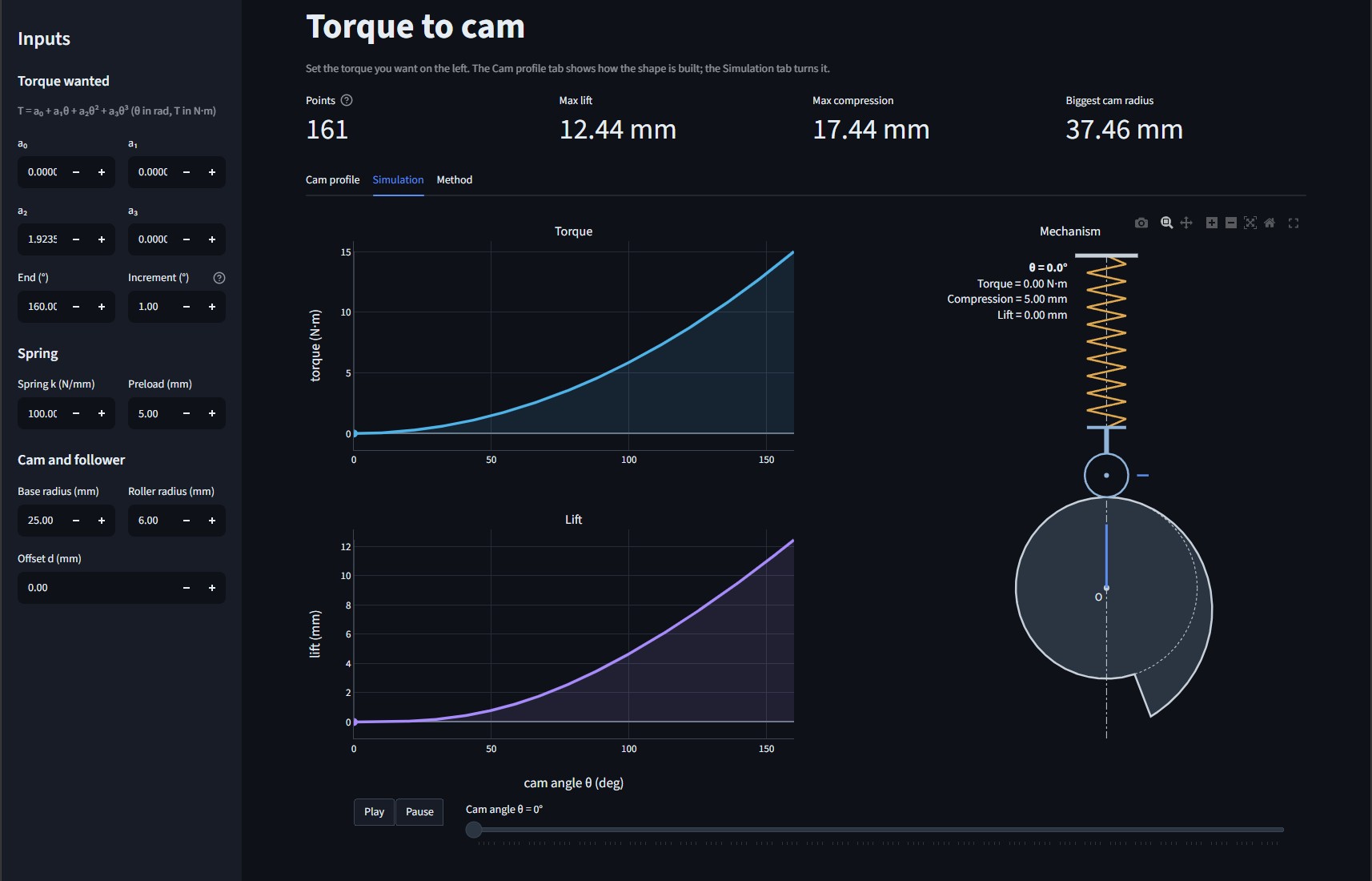
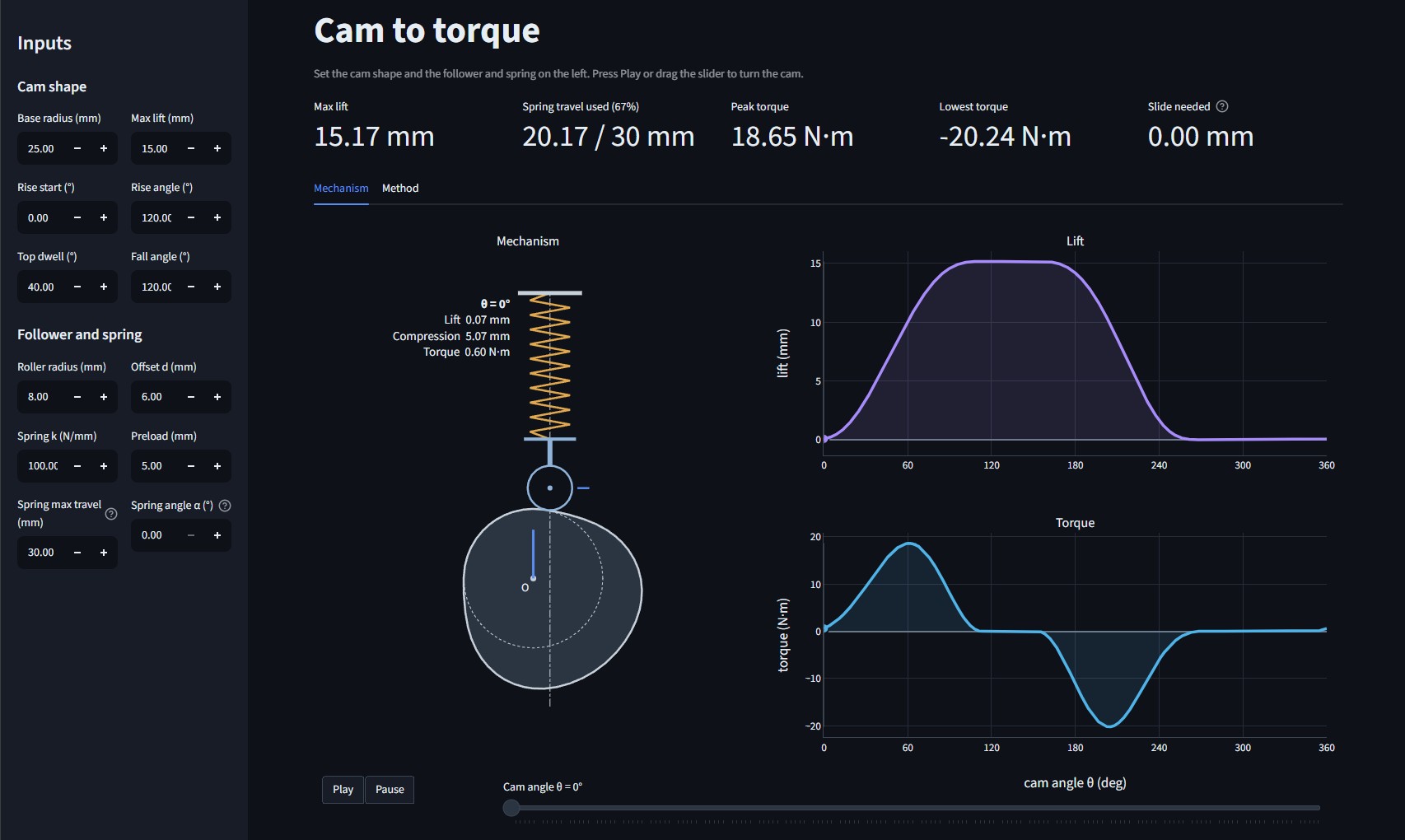
- Built two simulations in Python and Streamlit, both verified against hand calculations and published values:
- Torque-to-cam: designs a cam profile that produces a target torque curve over a set range of angles, with adjustable parameters to show how the profile has to change to match the curve.
- Cam-to-torque: generates the torque curve from a customizable cam shape, showing how spring stiffness, preload, and geometry affect the torque it produces.
- Chose spring stiffness as the initial adjustment parameter, since changing it scales the torque curve without changing its shape.
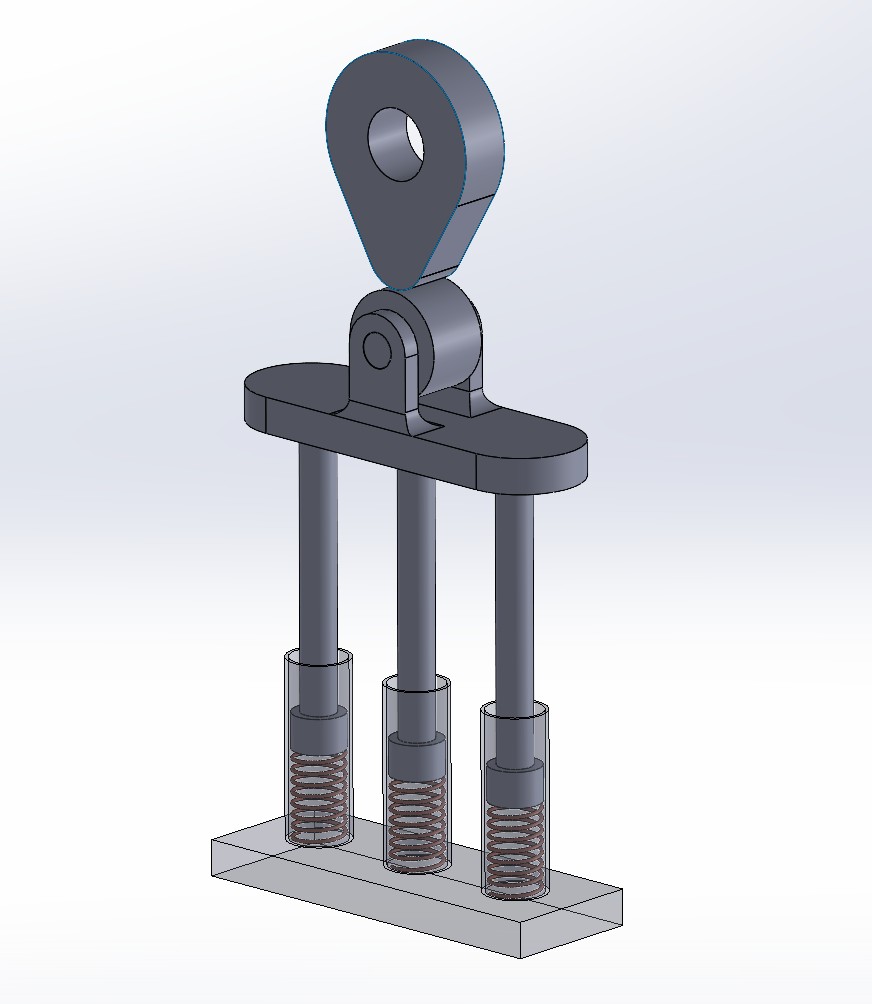
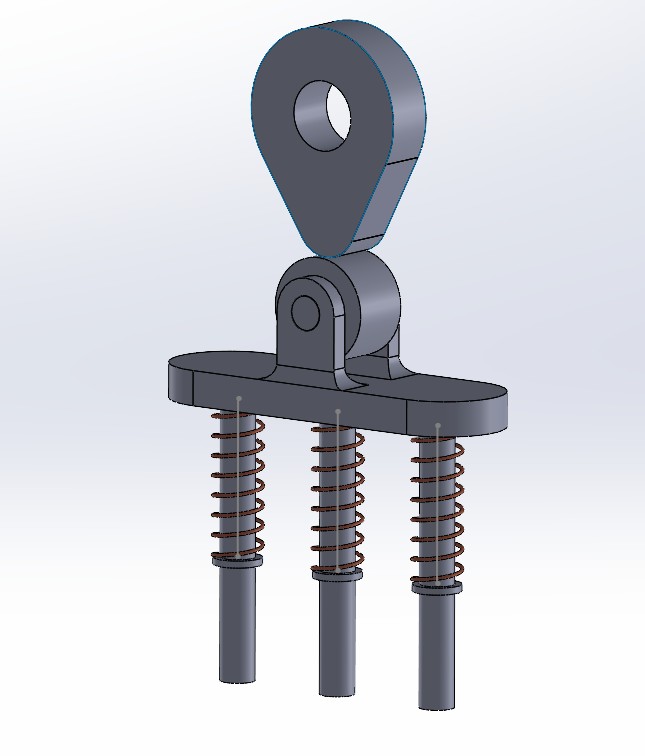
- Designed two baseline assemblies in SolidWorks, without adjustability yet, where the cam drives a roller follower connected to three parallel springs:
- V1 houses each spring in a cylinder on a fixed base.
- V2 places the springs around the rods, compressing against fixed collars.
Next steps
The design process is iterative, so results from later steps may lead back to earlier ones.
- Confirm spring stiffness as the adjustment parameter, or revise it based on further analysis.
- Develop several concepts for an adjustment mechanism, such as engaging or disengaging individual springs.
- Verify each concept mathematically using the simulations.
- 3D print and test the strongest design, measuring its torque-angle behavior in each configuration.
Baseline designs
Simulations